
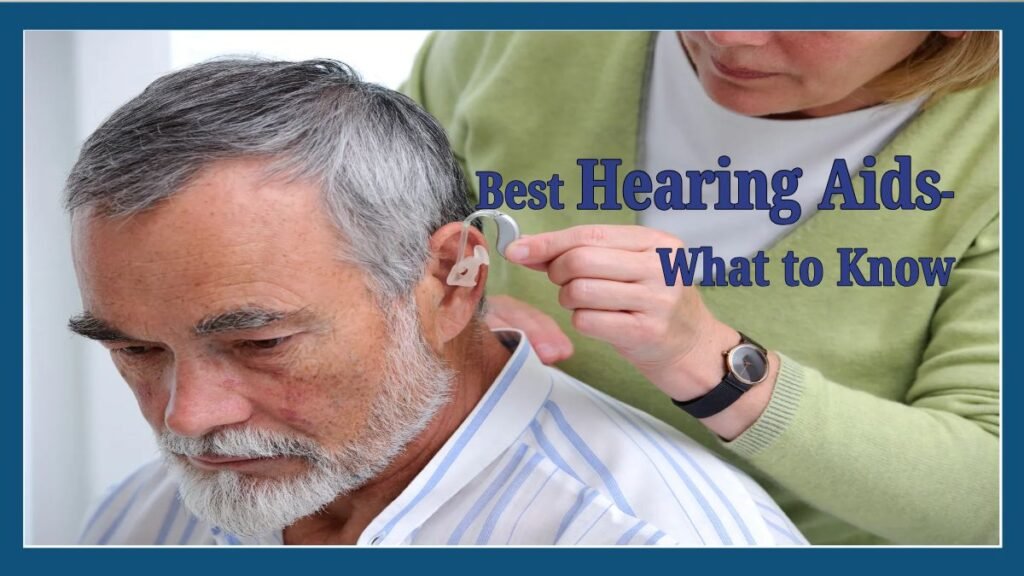
Hearing loss affects millions of seniors — but getting help has never been more affordable or accessible.
Disclosure: This post contains affiliate links. If you purchase through these links, I may earn a small commission at no extra cost to you.
You’re Not Alone — And Help Is More Accessible Than Ever
If you’ve been turning up the TV volume, asking people to repeat themselves, or struggling to follow conversations in noisy restaurants, you’re in very good company. Hearing loss affects nearly 2 out of 3 adults over 70 in the United States — making it one of the most common health conditions among seniors.
For decades, getting help meant expensive appointments, lengthy fitting processes, and hearing aids that cost $3,000–$7,000 or more per pair. Many seniors simply went without.
That changed in 2022 when the FDA approved over-the-counter (OTC) hearing aids — allowing adults with mild to moderate hearing loss to purchase hearing aids directly, without a prescription or audiologist visit. Prices have dropped dramatically, and quality has improved significantly.
Here’s everything you need to know.
Understanding Hearing Loss in Seniors
Why does hearing loss happen with age? Age-related hearing loss — called presbycusis — happens gradually as the tiny hair cells in the inner ear that detect sound slowly break down over time. Unlike some health conditions, this process is largely irreversible. But that doesn’t mean you have to live with the consequences.
Common signs of hearing loss:
- Frequently asking people to repeat themselves
- Difficulty following conversations in noisy environments
- Turning up the TV or radio louder than others prefer
- Missing parts of phone conversations
- Ringing or buzzing in the ears (tinnitus)
- Feeling like people are mumbling
Why treatment matters: Untreated hearing loss in seniors is linked to significantly increased risk of cognitive decline, depression, social isolation, and falls. Getting help isn’t just about hearing better — it’s about protecting your overall health and quality of life.
OTC vs Prescription Hearing Aids — What’s the Difference?
This is the most important thing to understand before buying.
| OTC Hearing Aids | Prescription Hearing Aids | |
|---|---|---|
| Who they’re for | Mild to moderate hearing loss | Mild to severe/profound hearing loss |
| Where to buy | Amazon, pharmacies, direct | Audiologist only |
| Average cost | $200–$1,500 per pair | $3,000–$7,000+ per pair |
| Fitting process | Self-fitted via app | Professional fitting |
| Follow-up care | Limited | Ongoing audiologist support |
| Best for | First-time users, budget-conscious | Severe loss, complex needs |
Bottom line: If you have mild to moderate hearing loss and want an affordable starting point, OTC hearing aids are a legitimate and FDA-approved option. If your hearing loss is severe or you’ve struggled with hearing aids before, a professional evaluation is worth the investment.
What to Look for in a Hearing Aid
Sound quality and clarity The most important factor. Look for hearing aids with multiple sound processing channels — more channels generally means better ability to fine-tune sound across different frequencies.
Bluetooth connectivity Many modern hearing aids connect directly to smartphones, TVs, and other devices via Bluetooth — streaming audio directly into your ears. A game-changer for phone calls and TV watching.
Rechargeable batteries Traditional hearing aids use tiny disposable batteries that can be difficult to handle with arthritic fingers. Rechargeable models are far more convenient for seniors.
App control Smartphone apps allow you to adjust volume, change programs, and fine-tune settings without touching the hearing aid itself. Especially useful in different listening environments.
Comfort and fit Hearing aids come in several styles — some sit behind the ear, others fit inside the ear canal. Behind-the-ear (BTE) models are generally easiest to handle for seniors with dexterity issues.
Trial period Always look for a generous return policy — at least 30 days, ideally 45–60. It takes time to adjust to hearing aids, and you want the option to return them if they’re not right for you.
Best OTC Hearing Aid Types Available on Amazon
Behind-the-Ear (BTE) — Best for Ease of Use
BTE hearing aids sit comfortably behind the ear with a small tube or wire directing sound into the ear canal. Easiest to handle, insert, and adjust — ideal for seniors with dexterity issues or arthritis.
[Browse top-rated BTE hearing aids on Amazon →]
Receiver-in-Canal (RIC) — Best Overall Sound Quality
RIC hearing aids are the most popular style among audiologists. The main body sits behind the ear while a thin wire carries sound to a small receiver inside the ear canal — resulting in more natural sound quality than traditional BTE models.
[See top-rated RIC hearing aids on Amazon →]
In-the-Ear (ITE) — Most Discreet Option
ITE hearing aids fit entirely within the outer ear — more visible than canal styles but easier to handle than tiny in-canal devices. A good middle ground between discretion and ease of use.
[View top-rated ITE hearing aids on Amazon →]
Bluetooth Hearing Aids — Best for Tech-Savvy Seniors
Bluetooth-enabled hearing aids stream audio directly from smartphones, TVs, and tablets — and allow app-based adjustment of volume and sound settings. Increasingly affordable and highly rated by seniors who use them.
[Shop top-rated Bluetooth hearing aids on Amazon →]
Hearing Aid Accessories Worth Having
Hearing Aid Dehumidifier/Dryer Moisture is the number one enemy of hearing aids. A hearing aid dryer removes moisture overnight, extending the life of your devices significantly.
[View top-rated hearing aid dryers on Amazon →]
Hearing Aid Cleaning Kit Regular cleaning prevents wax buildup that blocks sound output. A basic cleaning kit with brushes, picks, and wire loops is essential maintenance.
[Browse hearing aid cleaning kits on Amazon →]
Hearing Aid Batteries (if applicable) If your hearing aids use disposable batteries, keeping extras on hand is essential. Size 312 and Size 13 are the most common for senior hearing aids.
[Shop hearing aid batteries on Amazon →]
Recommended Products at a Glance
| Product | Best For | Amazon Link |
|---|---|---|
| BTE hearing aids | Ease of use, dexterity issues | [View on Amazon →] |
| RIC hearing aids | Best sound quality | [View on Amazon →] |
| Bluetooth hearing aids | Phone/TV streaming | [View on Amazon →] |
| Hearing aid dryer | Moisture protection, longevity | [View on Amazon →] |
| Hearing aid cleaning kit | Maintenance, wax removal | [View on Amazon →] |
| Hearing aid batteries | Size 312/13 replacements | [View on Amazon →] |
Tips for Adjusting to New Hearing Aids
Give it time. Most audiologists recommend wearing new hearing aids for at least 2–4 weeks before deciding if they’re right for you. Your brain needs time to relearn how to process sounds it hasn’t heard clearly in years. Everyday sounds — refrigerator hum, footsteps, your own voice — may seem startlingly loud at first. This is normal.
Start in quiet environments. Don’t test your new hearing aids at a noisy family dinner. Start at home in quiet settings, then gradually introduce more challenging listening environments.
Wear them consistently. The more consistently you wear them, the faster your brain adapts. Try to wear them every waking hour, even if it feels strange at first.
Take advantage of the return policy. If something doesn’t feel right after a few weeks, don’t hesitate to return or exchange. Finding the right hearing aid sometimes takes a couple of tries.
Does Insurance Cover Hearing Aids?
Original Medicare (Parts A & B): Does not cover hearing aids or routine hearing exams.
Medicare Advantage (Part C): Many plans include hearing benefits — coverage varies widely by plan. Check your specific plan details.
Medicaid: Coverage varies significantly by state. Some states cover hearing aids for low-income seniors.
VA Benefits: Veterans may qualify for free hearing aids through the VA — one of the most generous hearing benefits available.
AARP Hearing Care Program: AARP members receive discounts through a partnership with hearing care providers nationwide.
More Helpful Guides for Seniors
- 👉 Free Government Benefits for Seniors Over 65
- 👉 Medicare Parts A, B, C & D: Complete Beginner’s Guide
- 👉 Senior Discounts You Didn’t Know You Had
- 👉 Best Foods to Lower Blood Pressure for Seniors
The Bottom Line
Hearing loss is incredibly common in seniors — but it’s no longer something you have to accept or spend a fortune to address. OTC hearing aids have made quality hearing assistance accessible at a fraction of the traditional cost.
If you’ve been putting off dealing with your hearing, 2025 is the year to change that. Start with an affordable OTC option, give yourself time to adjust, and experience the difference that hearing clearly makes in your daily life — your conversations, your relationships, and your overall wellbeing.
Have experience with a hearing aid brand you’d recommend? Share it in the comments — other readers would love to hear it.
Disclaimer: This article is for informational purposes only and does not constitute medical advice. If you suspect significant hearing loss, please consult an audiologist or healthcare provider for a professional evaluation.